Location: Low Earth Orbit

low-earth-orbit

PDF
61

NASA-UAP-D018, Gemini 4 Experiment Debriefing, 1967

Gemini IV was the second crewed mission of the Gemini series. Astronauts James McDivitt and Edward White successfully completed the four-day flight between June 3 and June 7, 1965. The mission included the first American spacewalk. This collection of documents contains a transcription of the astronauts recounting their observations of bright particles outside the spacecraft, dated circa June 25, 1967, on pages 78-81, and page 101.
NASA1963224p Low Earth OrbitTypedLightly redacted
NASA Gemini Program audio transcript
PDF

NASA Gemini Program audio transcript

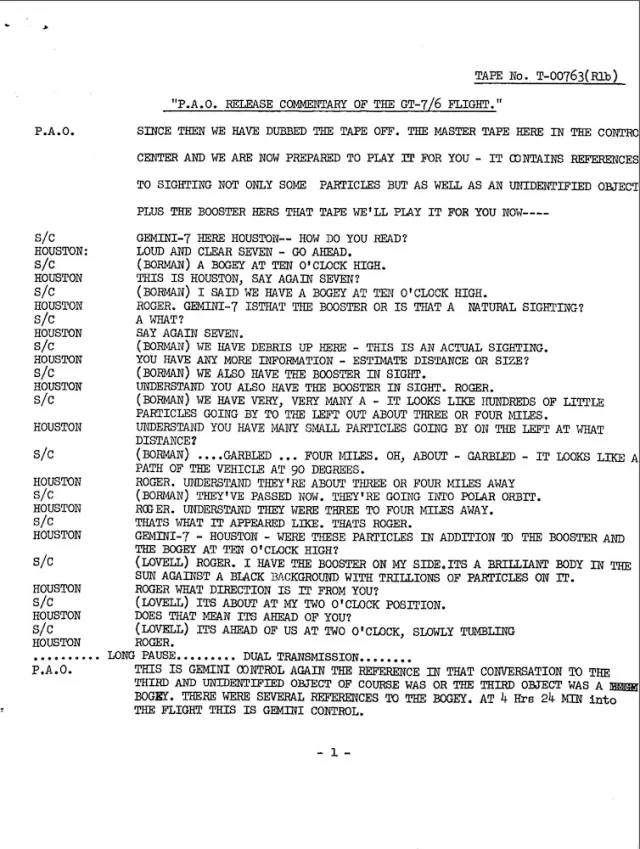
Transcript of NASA Gemini GT-7/6 mission audio where astronauts Borman and Lovell report an unidentified object ('bogey') and other debris to Houston Control. The document includes both a typed and a full handwritten version of the same communication.

PDF
2

NASA internal files

Collection of NASA internal documents from 1966 concerning the Gemini IX mission debriefing. Includes typed and handwritten notes, memoranda, and routing slips detailing scientific experiments, astronaut observations, and operational feedback from the mission.

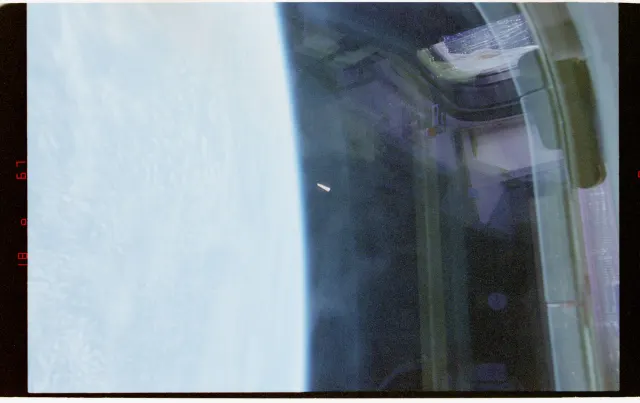
NASA-UAP-D031, STS-80 Unidentified Object Image 2, 1996
Image

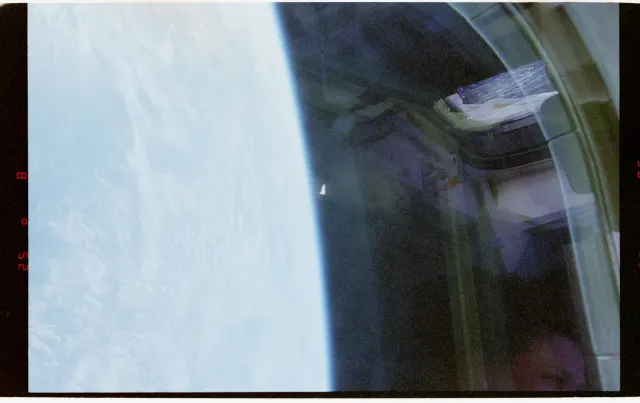
NASA-UAP-D031, STS-80 Unidentified Object Image 2, 1996

During STS-80, between November 19 and December 7, 1996, astronauts aboard Space Shuttle Columbia captured a series of three images of an unidentified object in low-Earth orbit. In the second photograph, the object is visible near the center of the frame, to the right of the limb of the Earth. It appears to have rotated or tumbled about its major axis, which is consistent with the behavior of a free-floating object.

NASA-UAP-D032, STS-80 Unidentified Object Image 3, 1996
Image

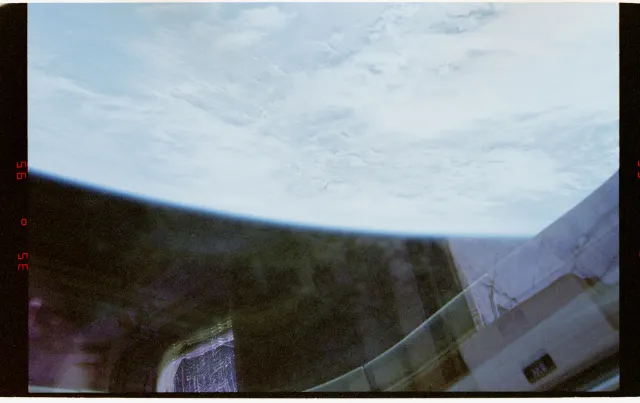
NASA-UAP-D032, STS-80 Unidentified Object Image 3, 1996

During STS-80, between November 19 and December 7, 1996, astronauts aboard Space Shuttle Columbia captured a series of three images of an unidentified object in low-Earth orbit. In the third photograph, the object is visible near the center of the frame, superimposed against the Earth. It appears to have continued along a trajectory passing between Columbia and the Earth.

Audio

NASA-UAP-D003A, Gemini 7 Audio Excerpt, 1965

This audio recording contains air to ground communications and the NASA Public Affairs audio feed with commentary, recorded during the flight of the Gemini 7 mission. In this excerpted segment of audio, Astronaut Frank Borman reports to NASA mission control in Houston his sighting of an unidentified object, which he referred to as a "bogey." This sighting occurred on December 5, 1965. The dialogue includes Borman's initial report, as well as additional comments by Astronaut Jim Lovell, Borman's fellow crew member.

Audio

NASA-UAP-D010, Mercury Atlas 9 Audio Excerpt, May 15, 1963

Approximately one hour and 41 minutes into the final and longest flight of Project Mercury, Mercury-Atlas 9 mission (MA-9) Faith 7 Pilot L. Gordon Cooper Jr. notes that he sees “John’s fireflies,” referring to John Glenn’s term from the Mercury-Atlas 6 mission. NASA later determined that the “fireflies” are attributable to frozen condensation separating from the spacecraft body. The white, green-hued appearance of this phenomenon results from sunlight reflecting off frozen condensation.

Audio

NASA-UAP-D011, Mercury Atlas 9 Audio Excerpt, May 15, 1963

During the final and longest flight of Project Mercury, Mercury-Atlas 9 mission (MA-9) Faith 7 Pilot L. Gordon Cooper Jr. describes the brilliant blue of sunrise beneath the haze layer of the Earth’s atmosphere. As he approaches sunrise, he describes small, luminous, brilliant white particles drifting away from the spacecraft. Cooper describes observing “fireflies” after deploying beacons, which are spherical mission-related equipment with xenon strobe lights.

Audio

NASA-UAP-D012, Mercury Atlas 8 Audio Excerpt, October 3, 1962

During the Mercury Atlas 8 mission, Sigma 7 pilot Walter M. “Wally” Schirra Jr. describes observing “little white objects that tend to come from the capsule itself and drift off.” Schirra later also refers to those objects as “particles” and “lathe shavings.” Schirra also describes seeing a burst of light in the window, whose source he cannot identify. He speculates that his observation corresponds with the moment the sun passes below the horizon during sunset.

Audio

NASA-UAP-D013, Mercury Atlas 7, May 24, 1962

During the fourth crewed spaceflight and second orbital flight of Project Mercury, Mercury-Atlas 7 (MA-7), Aurora 7 pilot Scott Carpenter describes white particles in view that appear to move at “random” and “look exactly like snowflakes.” He describes these phenomena as reflective, and that some seemed to move faster than the Aurora 7 spacecraft.